For Florida Gulf Coast University's University Colloquium
Thoughts on how Florida has both shaped and frustrated one of its rare native children.
Monday, April 19, 2010
This past week, a dear friend of my family's passed away. He was a friend of my parents in college, and I had known him all my life. I attended his funeral this weekend and wanted to have another way to honor him as well.
Jim Sicks was a rare and special man. He was a giving and loving person who truly believed in helping others. He was a gentleman and a loving husband, father, grandfather, and school vice principal. He passed away after a seven year battle with cancer. I have to admit that I am very angry at the universe on this one!
Jim was a native Floridian --of the old school variety. He loved the Everglades before it was hip and loved to use native plants in his home garden. There were many times he and my mother would tramp in the woods to look for bromeliads and orchids --even in the pouring rain, dressed in yellow rain slickers! Jim helped his wife Joy (a teacher) to plan and plant a butterfly garden at her own Sarasota school for the students to have a special place to witness the beauty and joys of nature.
Jim always gave of himself --to his community and his environment. He gave honestly and happily. I ask everyone to honor him and remember him further by doing the same. Go out and plant a native tree or bush. Go out and help someone learn to read. Go out and help someone struggling to get his/her groceries into the car. Just give of yourself to others and to the earth in honor of Jim. As my mother said, "We need to grow more people like him."
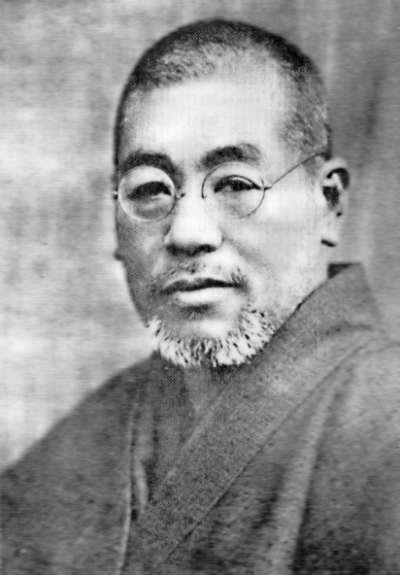
For a project in another one of my classes, I have begun to learn the healing art of Reiki. Reiki is a Japanese hands on healing technique using energy fields rediscovered by Dr. Usui (that's him at the top) in the late 19th and early 20th centuries. It is believed to be what Jesus and Buddha used. Reiki can be used on plants, animals, and people.
Reiki is not just something you learn either. You have to be connected to the Reiki energies to use it. I had my first "attunement" two weeks ago. It threw me for a loop for at least a week and is now settling within my system. I still have one more week of adjustment to go, then I can have my next attunement.
Reiki can be used to heal others and to heal yourself (which is the focus of the first attunement). One of the reasons I wanted to learn it is because of how it connects humans across borders. I can trace my attunement energy back to Dr. Usui through a lineage of 16 people. It's very cool! Plus I can use it to help others. One has to be open to have a Reiki treatment and open to give a Reiki treatment. You have to intend good for the world. I love it! I feel more connected to the earth and to my fellow humans --even though right now, my attunemnet has stirred up a great deal of anger at the moment!
Two things I've been thinking about:
1. When you go to Publix, the cashiers/baggers can't stand it --they have to use plastic. Every time I have my own bags or ask for paper (I put my recycling in paper bags to take to the recycling stand in my complex.,) they always end up giving me at least one plastic bag! If I have one item left not in a bag, instead of putting it in one of the existing bags, they toss it into a plastic bag on its own. If they start to put it in plastic and you remind them of wanting paper or that you brought your own bags, they just put the plastic bags in the bags. Yeesh! Do you think that they will have nervous breakdown if they don't use a plastic bag at least once? Is it so ingrained in our beings to use plastic bags that we can't deprogram ourselves?
2. Most beauty/personal care products don't come in recyclable containers, yet they are most often made of plastic. Toothpaste, eyeshadow, deodorant. They don't have recycle logos, and I feel guilty every time I throw one away. When are they going to got on the bus --green on the outside too, not just the inside!
Sunday, April 18, 2010
Remember to check your plastic bottles and other containers --those in the recycle numbers of 3,6, and 7 contain dangerous chemicals that mirror estrogen in the body and affect fertility. Don't reuse them --recycle them! Especially do not consume anything that has been sitting in those containers in the heat or sun --the effect is worse! And check the numbers before you buy! Many plastics will state they are BPA free too. Better yet, search the antique and thrift stores for old glass refrigerator containers. Those are re-usable and friendly to the environment. (Although, I can't remember if there were some that contained poisonous compounds or dyes. Might just be pottery --something to investigate.)
A word about those cheap, reusable shopping bags available at various stores. These are polypropylene and polyester. Both are synthetic fibers and are not biodegradable. How many tons of them are made, and how many of them are not recycled when they are damaged?
The stores make them available for their customers to purchase and then improve their "green" image with the consumer --and cheaply too. However, they are creating just another problem. Further, the consumer has not educated him/herself enough --on the whole --about what s/he is consuming. We've become sheep, trusting in those who lead us.
Open your mind and learn some things! And for the love of all that is holy --think things through! I was in Earth Fare (a healthy living grocery chain) a few months back, and they had a sign up that stated that plastic bags are lighter and therefore use less energy in transportation. Let's think this through. Would not the shipping truck be the same size? And would not the manufacturer pack that truck with more bags because they are smaller, thinner, and weigh less? So would they not in the end take the same if not more fuel to ship? Also how much energy goes into manufacturing plastic versus paper? Further, plastic is still not biodegradable! What happens to those bags that don't make it back to the store to be re-used?
Just saying. . .think it through. Don't just jump on the nearest bandwagon screaming past because it sounds good! And buy organic cotton canvas bags and troll the thrift stores for old tote bags!
In this post, we are to describe the high points or things we found most difficult in the semester.
I think the high points were the field trips, the final project, the films, the David Orr readings, and an excuse to a read Carl Hiaasen mass-market paperback novel because it was for school! I loved the chance to see Ding Darling without the added stress of trying to find time in my crazy schedule. And I finally got to see ECHO. My mother has made me promise to bring her when she comes down for my graduation.
I did find it difficult to juggle the extensive work load that the Colloquium class required. Four papers plus a blog plus a final project have worn me out, and at this junction of the semester, I wonder how I am going to get it all accomplished on top of the workload in my other classes. Colloquium should really be worth far more credits than it is.
Though I understand the need for many of the projects, papers, viewings, and readings, I think the university should consider more projects that focus on getting us outside and just being! Also, is it really sustainable to have people drive to campus to take a bus and then drive home, when many of our field trips were near various students' homes? Yes, the bus trip is used as teaching time, but that makes the class an hour and fifteen minutes longer than normal. It's wearing on the students, especially as it's during lunch time --not healthy. A little restraint, please! Also is it not wasteful, and a little hypocritical, of a class focused on environmental sustainability to have a textbook that is only good for one school year?Hmm, something to think about.
In this post we are to reflect on the meanings we have made from our Colloquium class experience personally, academically, and in relationship to our major.
I dragged my feet about taking this class as I am a native Floridian and have had plenty of experience in the wilds of my native land. Still, I learned a lot and enjoyed the field trips as a break from classroom activities. Plus, I wisely waited until the spring semester when it was much cooler, which made the trips far more enjoyable. As I told an adviser who questioned why I had not yet taken colloquium: "I am not about to traipse about this campus in the heat!" More snakes then too. I'm sure they all have some vital role in the ecosystem, and their absence would discombobulate everything like the absence of wolves did, but I prefer to live in denial and continue to think of them as thoroughly unnecessary.
I am an English major with a Creative Writing minor. I love to write, and this class has reminded me why I should devote some of my writing time to writing about the environment and sustainable practices. I hope to keep that in my mind as I continue forward in my studies and my career. Things are desperate and to me they seem hopeless. I don't tend to have a lot of faith that people can change. I spent most of the semester depressed about this. Maybe, I can help to make a change through my writing.
Here we are to list five important things we have learned about China, India, and/or other developing countries.
1. China is making some huge greenhouse gas emissions and may even surpass us soon. Meanwhile, their emissions are our emissions. Not surprising given how much we out-source production to China.
2. India is doing a lot to help sustain the environment. We often think of countries such as India as being too impoverished to focus on such things. This is proof that this is simply not true.
3. Many of my classmates are under the impression that our butting in to the policies of "developing" countries is in those countries' best interest, even if we are exploiting them for our own gain. "We've raised them up from nothing," is a quote from a fellow classmate. Talk about making my blood pressure go up! Not everyone wants to be an American and not everyone wants to live like us either! Further, we have often done more harm than good.
4. Though, I am a big fan of the E2 series, I noticed they too sometimes take the view that "developing" countries want what we have. So now I must go on one of my soap-box tirades. This viewpoint by E2 became abundantly clear when focusing on various places in Africa. The narrator and the people interviewed kept going on about how these people live in poverty. Yet, everyone they filmed appeared clean, well-fed, beautifully dressed (even taking time to wear aesthetically pleasing designs, colors, and patterns). Their clothes were in good repair too and were nicely accessorized. To me these people looked more like they were living simply than that they were poor. And while they are finding ways to bring sustainable electricity to many who have not had it before and improving energy use (like with the tea vendor) it is important to remember that not everyone wants to be electrified. Also, I hate the terms "developing" and "third world". Call them what they are for the most part: post-colonial! That's right --own up to what Western imperialism has done to these countries. Colonial occupation has forever disrupted the natural path of many of these societies. Once the colonists were gone, and the people had their countries back, they had no choice but to attempt to survive in an economically driven world since for centuries, their lives had been devoted (and the path of their economies changed) to serve the desires of the colonists. Now these countries face a new brand of imperialism --what Edward Said refers to as "economic imperialism". Watch "Black Gold" if you doubt this. To survive, frequently these countries have to do things our way and on our terms. They are only perceived as lesser because we created the image of them as such.
However, I must defend E2 on another count. Recently, our class took a trip to ECHO, a church run experimental farming organization. They focusing on doing God's work by feeding the hungry of the world. I noticed that all of the ECHO volunteers in the DVD presentation were white and all of the "students" were of a much darker complexion --many of African ancestry. I got the sense from the film that ECHO sees itself as saving the poor brown man --and isn't he so lucky that we white people are so charitable and are here to help him. Though, on the whole, they are doing good work, this creeped me out. Plus, I also wonder how often Christianity is foisted upon the recipients of their help. E2 in contrast spoke to people making a difference of all races and ethnicities both inside their own countries and across the world.
5. I'm still fascinated by the reaching of peak-oil in Iran and the timing of the Islamic revolution. My graduate studies will focus on a creative work set in Iran. I look forward to studying this little nugget of information further.
For the episode of our choice, I chose the one on Portland. This episode focuses on urban spaces and a sense of community, especially in Portland, Oregon. What a beautiful place, Portland!
I wanted to watch this episode because I thought it might help with our final project. Our final project focuses on the revitalization of downtown Fort Myers. My group is focusing on the riverfront. It's a very exciting project! Although, I might have also like to work on the revitalization of Dr. Martin Luther King Blvd.
I think what I took away the most from this episode is how Portland is cultivating a sense of place. We've become so surrounded in what Beaudrillard terms the "hyperreal" that we've lost a sense of culture and sense of place. We've expanded into suburbia and fallen in love with chain stores. We've become homogenized. Like Portland, Ft. Myers has its own special history that should be retained and cherished and we should be proud to live in such a community. As such, in my portion of our project, I have added a leisure center that makes use of an old riverfront building and would bring many people in the community together. It would also offer a history course on Ft. Myers, while also encouraging downtown community meetings. (They have these in Botswana --part of old tribal traditions --where people in the community can come together and voice their concerns and support one a another. It would be wonderful to make downtown Ft. Myers as friendly and beautiful a place to live and work as Portland --and to give it just as much a sense of its own place as Portland has.
Episode 3 of E2 Transport was about food miles. It takes 10 calories of energy for every calorie of food we consume. We like to drag our food everywhere! I loved the owner and chef of the White Dog cafe in California who has been sourcing local produce for her restaurant since the 1970's. Now she is working on cruelty free meats. She has also tried to help expand these practices to other restaurants. In England chefs have been doing the same thing. Jamie Oliver and Clarissa Dickson Wright are among the many prominent chefs leading the way. For several years, I myself have refused to by California citrus. For Pete's sake, we're in Florida! Then there are those expensive Dutch red bell peppers: It's said we import them because they use fewer pesticides in growing them, but what has to be done to preserve them long enough to get them to the U.S. cancels out any good. Plus they are SO expensive! We grow perfectly good bell peppers in Florida.
Favorite quote: "We export butter cookies to the Dutch, and they export butter cookies to the U.S. One economist said, 'Wouldn't it just be easier to exchange recipes?'" Meanwhile, I still need my P.G. Tips and H.P. Sauce.
Here we are to write about E2 (E-squared) Transport --episodes 1
Episode 1 was set in London. I have to admit that the day I watched it I was v. tired and so happy to see images of my beloved foggy, rainy London that I spaced out a little bit. But a few things did sink in. A lot of green practices regarding transportation in London have to do with the new mayor --who, like Chicago's Mayor Daley, has been criticized for them. Yet he rocks-on anyway!
I found the congestion tax, super cool and very interesting. I also liked how they made they roads more pedestrian and biker friendly, even making wider bike lanes. I also liked the comments on the previous administration's use of barricades to separate the pedestrians from the cars. My favorite image was of a group of executives, in their black overcoats and hats and carrying their black umbrellas and briefcases, walking in formation behind one of the barriers. They looked like prisoners on morning exercises!
I liked too that Trafalgar Square as been closed to traffic and is now an open space. In the 1980's I spent a New Year's Eve watching the festivities from the window in the bar of our hotel in Trafalgar Square. My favorite New Year's ever! Another notable thing about that experience is that although the place was packed with people and trash was everywhere, the next morning it had all been cleaned up and put to rights. Totally impressive!
In this post we are to write about the film "Crude Awakening". It's about the peak-oil crisis. Though I think they were a little heavy handed with the emotional manipulation through horror film music, they did make some good points. I especially loved the images from the early part of the twentieth century during the oil boom --some in the U.S. and some in Baku. Men were covered in the stuff, splashing in it like children in puddles. It gave a strong sense of wastefulness. Then contrasting those images were images of Baku after the oil ran out. The land was decimated! It looked like a battle field. (Interesting how the destruction humanity inflicts upon the earth always looks like a battlefield. I've often said the same thing about clear-cutting land. The "after" scene always looks like images I've seen of WWI).
I also love all of the old film clips of mid-twentieth century ads about oil and oil products --cars, cosmetics, clothes, gasoline, etc. Though these ads were meant at the time to be pro-oil, they are chilling now. They could be read an entirely different way!
Another thing I found interesting, was that peak oil in Iran was reached in 1978 --around the same time of the Islamic revolution when the Shah had to high-tail it out of there. It's known that the U.S helped to put him in power. I wonder now if it also chose to desert him when the oil supplies ran out. As anyone who knows me will tell you, I have a great deal of respect for Iran and the Iranian people. Neither of the most recent governmental regimes have worked well for them and neither have they been complete failures. Yet, I wonder how much the U.S. (and Britain and France, etc.) has helped to cause the political situation Iran faces now --and all over using them for our own oil agendas.
Favorite quote from the film: As far as I know, They're not makin' a lot of dinosaurs anymore."
In this post, we are to comment on the PBS E2 (read E-squared) series. These half-hour episodes focus on ecological and sustainable design, transportation, and energy. They are A-M-A-Z-I-N-G! You can rent them, watch them online, or better still --buy them as it supports PBS.(Of course, if you're feeling v. consumer spending conscious in deference to the environment, then you could watch them online and just donate money to PBS --just as long as we support PBS). This series, narrated by Brad Pitt and Morgan Freeman, go around the world to look at various countries and what they are doing to help the environment. From rooftop gardens and green space in Chicago to turning a garbage dump into a garden and park in Cairo --these shows are fabulous.
This particular journal entry should focus on season one of E2 Design --episodes 3, 6, and one of our choice. Episode 3, "The Green Machine", was about Mayor Daley in Chicago and how he wanted to green-up the city. He received a lot of criticism for his actions and beliefs, but he was determined. It's about time someone in the U.S. takes a stand in the political arena about environmental issues --for the good of the earth I mean --we already have George W. Bush.
Here's some stats from the opening credits of the series that illustrate the importance of Daley's work: 40% of the world's energy and 50% of its carbon emissions are from building and more than half the world's population live in cities. Chicago is the birthplace of the skyscraper, so it knows a little something about these stats from experience.
One of Mayor Daley's first projects as mayor, and the one that stays in my mind (strange because it has nothing to do with greener building practices but probably because it's so Secret Garden-like)is creating a rooftop garden on top of city hall. He saw this in Europe and wanted to recreate it here. Most city buildings are a flat expanse of tarmac and gravel that just soak up the sun and require higher energy use --especially in cooling a building. They make a perfect canvas for green space so desperately needed in the city. The city hall garden was also home to a whole ecosystem of of plants, animals, and insects.
Many criticized the mayor for his choice to make this his first green project, but now they see it as a symbol of the administration and of the importance of greener practices.
My favorite quote from this episode is: "We cannot consume our way out of this." So true --that's what got us in the mess in the first place!
In episode 6, they went to China and looked at the change in building design there. Architects made use of natural light and the dynamics of air flow to create a building (I think it was a library) that used far less energy heating, cooling, and lighting. Plus the added benefit was that one could curl up with a book or work at a table accompanied by a beautiful view of the city. On a stormy, rainy day that would be heaven! I also loved the escalators that stopped running when no one was on them. Fabulous!
Now for the episode of our choice: I chose episode 2, "Green for All." Loved it! It was about affordable housing for the Yaqui Indians in Mexico and creating a sense of community with affordable housing in Texas. The episode centered these projects around architect and teacher, Sergio Palleroni. He's lovely, and by the end of the program, I had developed a major crush on the man. He respectfully worked with the people of Mexico and in the Texas community instead of at them. I use "at" meaning --he didn't view himself as someone there to save the less fortunate but as a neighbor and friend who just happened to have extra skills. This a rare thing in the West where the prevailing attitude is to save the brown man from himself.
Palleroni created housing for the Yaqui that functioned the way they functioned. These homes were made from local materials and were set-up to accommodate the way these people lived. These houses also required less expensive upkeep, so stayed within the owners' budgets.
In Texas, Palleroni gathered a group of volunteers to help clean up a low income neighborhood. They fixed things in the houses and cleaned up a shared alley. By cleaning up the alley, they created space for gardens --for food and aesthetics) and brought a sense of community and pride back to the neighborhood. Instead of being a forgotten place fraught with crime, it became a community gathering place and a safe place for children to play. It reminded me of Gwendolyn Brooks' poem "a song in the front yard". I've been inspired to write a poem myself about it!
O.K. I've been dragging my feet for several weeks on this one. In this assignment, we are supposed to find a source on the web that argues that climate change is not an issue. I've been avoiding it as I strongly believe that anyone who denies the presence of climate change in the overwhelming light of overwhelming evidence is either deeply in denial him/herself or is working under a hidden agenda. Either way, s/he would make my blood pressure go up and that wouldn't be pretty.
Anyhow, I had to tackle it, so I found an article in the Telegraph online about Dr. Michael Griffin. Dr. Griffin was nominated head of NASA by George W. Bush in 2005. His nomination was later approved by the Senate. In 2007 Dr. Griffin stated, "it was 'arrogant' and unfair to treat global warming as a problem that needed to be tackled." He further stated that global warming did likely exist but that he didn't feel it was a problem. He said, "To assume that it is a problem is to assume that the state of Earth's climate today is the optimal climate, the best climate that we could have or ever have had and that we need to take steps to make sure that it doesn't change."
Sure, he's not denying climate change, but he is suggesting that it's not necessarily a bad thing --perhaps he might also be suggesting that climate change is just a matter of earth's evolution and not a man-made thing. Hooey! Dr. Griffin was widely criticized by his colleagues for taking this stand and later apologized to them behind closed doors.
It is also a well-known fact that George W. Bush had extensive oil interests and came from an oil state. And, as we learned in class, he and his administration did a good job of burying climate change data. Talk about an agenda! (See the 60 minutes interview with respected NASA scientist Jim Hansen and the Bush administration: http://www.cbsnews.com/stories/2006/03/17/60minutes/main1415985.shtml) Dr. Griffin seems to have climbed on board Bush's agenda train too.
Jim Hansen, however is a respected scientist who first brought climate change to world attention in the late 1980's. Climate change is not a new concept --it just seems to be after eight years of foolishness under the Bush administration. Jim Hansen referred to Griffin's statement as "arrogant" as well.
It is also interesting to note that, with the coming of the Obama presidency, Griffin left his position as head of NASA. There is this complicated dance where the heads of various agencies tender their resignation during a change of administration. Various colleagues make recommendations that certain heads should stay, and the new administration decides to accept or decline their resignations. Dr Griffin's resignation was accepted and he had to find a new "agenda". GOBAMA!
Thursday, March 25, 2010
Here we are supposed to comment on the concepts of Externalities and Tragedy of the Commons.
Externalities is a term in economics that refers to factors of a transaction that are impacts on parties not directly involved in the transaction. When that happens, the price of that transaction does not reflect the full costs or benefits of the product or service being transacted. These spillover effects can be both positive and negative.
Since this is an environmental class, I will try to focus an externality that have to do with that. Pollution is an example of an externality. A coal burning electric plant in Minnesota can pump carbon into the air that pollutes the neighboring towns and the surrounding environment. The carbon emissions from this plant also rise and spread out in the atmosphere --hanging there for fifty years. These carbon emissions can even affect a village in Africa or the condition of the polar icecaps.
The difficulty of externalities is that their effects and costs are difficult to accurately determine. Often we don't understand the side effects until we are too reliant on the product or even before it's too late. In our economically driven society, we want to quantify things and put a price tag on them. Suing a power plant for damages done, or taxing them for their use is often a popular solution to the problem. Yet, money isn't going to fix the mess. Plus, this may not be entirely fair. We were all in support of power plants. Wlectric lights, air conditioning, electric appliances, etc. are all conveniences we clamored for and now rely upon. But now that we understand much of the damage these power plants are doing to the environment, we want to disassociate ourselves and lay the blame entirely on them. We want them to carry the burden of higher taxes and clean-up. Meanwhile, these plants are scrambling to provide enough fuel to keep up with demand when the weather turns cold and we crank up the heat. How convenient.
There is also the difficulty in determining what that price tag might be. We may not understand the damage a new technology or practice may create until a hundred years down the road. We can't predict it. On the other hand, we tend to bow to the almighty dollar first and believe ourselves invincible in the face of exciting new discoveries. As Drs. Stoff and Pellegrino explained in their book "Chronic Fatigue Syndrome: The Hidden Epidemic", humans are developing technology faster than they can ever hope to understand it. We have more power than ever before, but we have not yet mastered its potential. We're creating more than we know how to handle. It might be time to slow down and deal with what we've got.
Which brings me to the "tragedy of the commons". This is a phrase coined by scientist Garrett Hardin in 1968. He uses the example of farmers in Europe grazing animals on a common field. He believes that a farmer would happily add another animal to his herd to graze on that common because of the benefits to his business. He could make more from the sale of that extra cow or sheep. However, this additional animal could tip the scales and deplete the grazing potential of the land for all farmers. He could ruin himself and everyone. The same goes for fishing. One greedy fishery could deplete the sources for everyone. Again, we are looking at the economics of the situation. The money speaks louder than common sense. And greed makes many want to keep everything for themselves. Can you believe Hardin had critics of his ideas? Yeesh. The tragedy of the commoms is commonsense.
As we begin reaching peak capacity on many of our natural resources, it's important to look at Hardin's work again. He attempts to offer solutions to the problem. I don't necessarily agree with his privatizing things. We already have enough dispute over land and water rights --wars are fought for that. Yet, we do have to realize that there is a finite amount of resources, and we must cut back to allow those that can recuperate a chance to recover.
In this entry we are to come-up with ways to reduce our reliance on energy. Well, in Florida, we don’t need the heat so often as we rarely get cold enough for it. However, this winter has been colder than the past several years. Many people cranked up that heat and quite a few were left without power. I’m a native and I haven’t felt the need to use the heat once this winter. Really, if you're cold put on another sweater, snuggle under a blanket. It’s not feezing!
Of course cooler weather means that the air conditioner doesn’t have to work as hard. Most of the time, it’s not needed. Open the windows and let the breeze flow through. It’s good to air the house out once in a while. I read an article a few years back about how old houses were better for your health than new houses because they weren’t as airtight. Air could regularly flow through and refresh. We are so concerned about keeping stuff out sometimes that we forget we are trapping stuff in. We are natural creatures after all --we need fresh air. This article made me feel immensely better at the time. I was living in my first place –a 1940's cottage in downtown Naples –where I could see daylight through my floorboards.
And speaking of old Florida houses, there’s something to be said for regional architecture. In the times before central air, Florida houses were built to make the most of breezes to maximize cooling. Instead of building houses identical to ones in Minnesota, Ohio, or Maine, one should build them to compliment Florida’s unique weather patterns. This includes hurricanes. Older Florida homes have rooves carefully designed to withstand the beating. Newer homes not so much. What’s the carbon footprint on rebuilding after a hurricane?
Another great way to keep things cool and to use less energy is the Florida preference for fans. They use less energy than air-conditioning and will often keep you from having to crank the air up so much.
Now here’s another tough one. Television. I know I love my shows, and I’ve got to have my British television. Netflix is my lifeline to that. Of course, Netflix is good in that it shares its DVDs with many others across the country. Instead of people buying all of their DVD’s they share them with one another. Fewer need to be produced, saving energy. Sure there is the energy usage from mailing the DVDs all over the country, but DVD manufacturers would have to do that anyway, getting their DVDs to the store. A crush to the DVD/film industry, but they’ll have to learn to live with it. Better they sell fewer now than none later.
Go to the movies more often too. I’m sure the energy expended by a packed theater is less than all those individuals running the air and television and DVD player and popcorn machines at home. Plus, watching a film in the theater is more communal. Some movies are even better when you’re sharing in the laughter and tears of those around you.
But one could also turn the television off. Remember books. And no, I don’t mean the Kindle or Nook. I’m talking the old school kind with paper and no batteries. You can carry one anywhere and even read it when there is no power! I love my books! I love the way they feel, the way they smell, and I love the magic of the fictive dream. In fact, I probably should be treated for addiction, but I am rather happy in my dysfunction. There are lots of communal things to do with books too. Books clubs, libraries (Just in case any of us have forgotten –those are like Netflix –only free and with books too) browsing through used bookstores and new bookstores. Ever thought of reading Jane Austen by candlelight? Ah, candlelight. Soft, romantic, and no electricity. Try it.
Try eating at least one meal a week that doesn’t require cooking. We can’t eat raw all the time; our bodies can’t take it, but once or twice a week is doable. There are many cookbooks out there to help you find recipes too.
Now, do you really need to drive the two blocks to the grocery store to get milk and bread? Probably not. Walk. Bike. Although, I admit that I am afraid to bike those two blocks myself. As I said before, I’ve been run off the road. Perhaps we need more biker friendly lanes. Right now, bikers only get a narrow strip on the edge of the road and that strip cuts across turn lanes. Whose stupid idea was that? How many drivers do you know who suddenly cut across that lane to make a turn? A biker could get crushed. Also, the law states that bicyclists must go with the flow of traffic, whereas pedestrians walk against it so they can see oncoming traffic. What, bikers aren’t vulnerable too? Another stupid idea. When I was in elementary school, cyclists went against the traffic too. If I hadn’t done that when the SUV ran me off the road, I could have been seriously injured. We need bigger bike lanes and laws to prevent cars from using them as passing lanes. Better yet, I like how they do it on Sanibel: the bike lanes are separated by a median. Also, we should make it easier for people to bicycle. In France, they have communal bike racks. You can get a bike pass and use that to take a bicycle and ride it from one part of the city to another. Super cool. And the system could be run on solar power. Yes, let’s use that solar power!
Sunday, March 21, 2010
On Friday I went to the beach and lay flat out on the sand. It was wonderful! I like to do this when my fibromyalgia is getting the best of me. We need to absorb and connect with the electromagnetic field of the earth to function healthily. Because we don't walk as much anymore, we don't get that connection. I'm sure many of you have heard me talk about this before. A German company makes an electronic mat that you can lie on to simulate that connection. It even has a wand to focus on trouble spots that pain you --like knees, hips, or elbows. Can you believe this? The mat costs thousands of dollars. Yeesh! The things we do to avoid nature! I prefer to lie on the beach.
More Corkscrew Sanctuary photos
Cute baby turtle!
Willows at Corkscrew Sanctuary. Used to make aspirin. Or as I like to call them: baby aspirins!
Corkscrew Santuary photos
A few weeks ago we went to Corkscrew Sanctuary for a class field trip. It's been several years since I last visited. It was neat to see it in "winter" versus the heat and wetness of summer. As our guide said, there is always something different to see throughout the year. With "perpetual" sun in Florida, we don't often think of changes in seasons and the accompanying change in flora and fauna.
Sure we don't have beautiful fall foliage(although we do have sumac and maple that turn) and the weather doesn't change all that much. My dad use to always say, "It must be fall. The cyprus needles have gone brown." And, "I bent to tie my shoes and missed winter." This year winter seems to be lingering --more cold and surprisingly more rain. Of course, I remember frequent cold winters --it's kind of nice to have that back again. Even though it's probably due to climate change.
When I was six it snowed in Tampa. My mom and I scraped snow off the hood of the car and had a snow ball fight before I went to school and she went to work. At school, everyone was trying to save the snow in jars and I hid under my desk, because kids wanted to throw snow at me. In high school it snowed in Naples --though it melted before it hit the ground. School was canceled because the power went out from all of the heat usage.
Anyway, back to Corkscrew. Last time we went it was summer and hot and humid to the max. Water levels were higher, and of course, mosquitoes were everywhere! I got stung in the shoulder blade by a yellow jacket and couldn't lie down for a week! But the mallows were blooming --red and beautiful. In fact, a lot was blooming and alligators swam mere inches from our feet. The water was right up to the catwalk. My parents and I have seen more alligators than we'd know what to do with, but my mom and I loved looking at all the native plants and flowers and trying to identify them. My dad was running around with his camera taking photos a la Clyde Butcher --though obviously not up to his waist in muck.
This time animal sightings were rare, but the baby turtles were adorable and I enjoyed seeing the soft shell turtle too. Also, such beautiful birds. There was a huge snowy egret --I'd never seen one that large before! He was a big fella! Many of my classmates wanted to see snakes --mostly moccasins. I've seen more Florida snakes than I know what to do with too --including the dreaded and v. aggressive moccasin. I could do without a sighting myself. I'd love to go in September when, I'm told, the sunflowers cover the savannah and grow to amazing heights.
The thing that struck me the most though about our Corkscrew vist was the water recycling system they had set-up using plants. Brilliant, actually. But one of our guides told us that the water is chlorinated for human consumption, but when it goes back into the environment it has to be de-chlorinated because it's harmful to many living things. Hmm. Should this not tell us something? I know my doctor forbade me to drink tap water years ago because the chlorine destroyed many of the good bacteria needed in our digestive system. Hmm, again.
Saturday, March 20, 2010
Today is the first day of Nowruz --the first day of spring and the first day of the new year in many cultures. It is said that what you do today will set the tone for the whole year. Be giving and do kind things to yourself, the earth, and your fellow inhabitants.
I've done some spring cleaning; recycled; planted tomatoes, nasturtiums, sunflowers, and some grass for my cats. I also wrote; read the story of Amoo Norooz; and decorated with flowers (lilies and hyacinth), plants, wild rue seeds, apples (organic of course) and an orange (Florida of course).
I've included a picture of my coffee table with some of my Nowruz decorative touches. Candles represent a holy fire. Apples represent fertility and beauty. The mirror reflects the light of the Lord of Wisdom and the images of his creation. The orange floating in a bowl of water represents the earth floating in space. My goldfish card is standing in for live goldfish to represent the beginning of creation. The rue seeds, resting in a vintage Iranian ashtray I found on eBay, are usually burned to ward off evil spirits. I don't have a brazier, so I'm burning incense instead --frankincense and myrrh also ward of evil spirits, which is probably why the wise men brought them as gifts to Jesus.
There are many other items to add to the table. I will do that later today. Plus I have a wonderful feast planned. If you want to know more about Nowruz --Farsinet is a good place to look as well as Kodoom.com. Also, my favorite Iranian cookbook author, Najmieh Batmanglij, has published a book on celebrating Nowruz: "Happy Nowruz --Cooking with Children to Celebrate the Persian New Year." I found my copy on Amazon. Batmanglij lays out the thirteen day Nowruz celebration with clarity and beauty. She includes a cookie cutter; wonderful recipes; and directions for making a Nowruz garland, coloring eggs (some with natural dyes and making eggshell planters to grow sprouts and grass, plus many other wonderful things.
This is a holiday in celebration of the earth. As David Orr tells us, biophilia is a spiritual experience too. Experience, feel, and appreciate your connection to the planet today.
Monday, February 15, 2010
I just finished my ecological footprint quiz. I'm pleased that I came in below the country average: carbon --73.2 compared to 91.4, food --41.4 compared to 65.7, housing --19.4 compared to 31.6, goods and services --23.1 compared to 57.7. That last one will surprise many who know me --because I love my stuff! However, I have a lot of family hand-me-downs/heirlooms and love antique stores and thrift shops.
Now, here's the scary thing. Even though my footprint is below the national average, it would take 4 1/2 earths to sustain everyone on the planet living like me. Yikes! As a global community, humans are currently averaging around 1 1/2 earths. Big difference --and I'm lower than the average in the U.S.
In some respects there isn't a whole lot I can do. I live in an apartment complex --so I can't alter my dwelling --I'm stuck with what I have. For my electrical and water needs I am stuck with whatever is available to me locally, and as far as I know, Collier County isn't exactly leading the way with alternative fuel technologies. However, I can bring my reusable thermal cup and water bottles with me --which I already do --I even bring my own spoon for stirring my tea. I can bring my canvas bags to more places --not just the grocery store. I can use longer life light bulbs. I can install a water-saving device in my toilet (I saw this on a re-run of Home Improvement on TV Land). I can also take a 4 minute shower --you can even get a little hour glass to put in the shower to keep time. This last one could be hard though. The hot water feels good on my fibromyalgic muscles. And I could go back to recycling my cooking water. I do it to a certain extent now, but I could do more. I can't do a whole lot about how much I drive. There aren't public transportation options here. I attend school in another city, but if my grad school plans go well --I shouldn't have such a long commute. Now that the weather is hospitable in Florida I could bicycle to the grocery store and pharmacy --but I am afraid for my life on the roads. I had a woman run me off the road and into a pole with her SUV once. However, I always combine my errands as much as possible.
Now, I intend to send the link to the ecological footprint quiz to everyone I know. You do the same. Make your friends and family take it --get the word out --don't let just the media and business marketing campaigns inform them. Here's the link: ecologicalfootprint.org.
Sunday, February 14, 2010
I am skipping the one due 8 February for the moment --we are supposed to take the "Ecological Footprint" quiz on myfootprint.org. I want to devote my full attention to it, so let me get the next entry out of the way.
We are supposed to reflect on the National Geographic Strange Days series --episode 2 --"The One Degree Factor".
In class of late we have been focusing on how just a one degree Celsius increase in temperature can radically change the world. This is a frightening concept as we are currently faced with a warming world.
"The One Degree Factor" focused on changes in habitats both positive and negative due to changes in temperature. Most interesting I thought was the investigation into the increase in asthma related illnesses and diseases affecting the fan coral in the Caribbean. They linked these with Sahara dust blown over from Africa. Though this dust had been blowing over the Atlantic for millennia, there was suddenly a wealth problems. The search took us to Lake Chad in Nigeria, where the lake is now 1/20 of the size it used to be. Fishing and pleasure boats rested forgotten in the sands of a newly arid land. Then, because of the warming of the Indian Ocean and also an increased build-up of CO2 in the atmosphere, the North Atlantic Oscillation has become stuck in its intense phase for the last twenty years. This all means that more dust is blowing over to the Americas and blowing for longer periods than before.
There are many, I think, who don't believe that what they do matters anywhere else, and that what others do is someone else's problem. This episode showed me that now, more than ever, we have to think as a global community. If you have anyone in your life who seems to eschew helping the environment, sit them down in front of "Strange Days". tell them there will be a quiz after.
For this entry we must reflect on our Marjorie Stoneman Douglas readings from her legendary "River of Grass".
I love her. She is so poetic and had a true love of the Everglades. She did such a brilliant job creating the mystical world of the Everglades in a way that made them matter to so many. In "The Nature of the Everglades" and "The People of the Glades" she writes of all the elements that make up the everglades --the vast "velvet" expanses of saw grass, the water, the rock, and the river that connects it all. She describes the many animals and some of the early settlers that have made the Everglades home and how the cycle of life is ever important to the existence of everything.
As I read this magical work, languishing in a chaise lounge near the pool, I thought back to a rainy October afternoon in Micanopy near Marjorie Stoneman Douglas' home. I visited Payne's Prairie Preserve --Florida's first state preserve and a national natural landmark. There are wild horses and bison there. Though all of them seemed to be seeking shelter from the rain that day, so I didn't spy any of them. The only ones to brave the elements that day were a school group and myself. While the middle school kids were touring the visitors' center, I wandered off into a quiet patch of wood. I had been away from people for a few days and I took comfort in the noise of the kids, but there was a special quiet to that wood.
I stood at the bank of a stream and listened to the water trickle by me. At some point, I heard a rustle behind me. Feeling rather cautious as a single woman traveling on her own, I turned around quickly and came face-to-face with --a deer. We were nose-to-nose and eye-to-eye. Though hers were the more beautiful: so big and brown with soft framing lashes. We stood there, just the two of us, in that quiet darkened wood for a long while while thunder rumbled i the distance. I wanted to reach out and stroke her soft snout, but didn't want to frighten her. After awhile, I sensed that she wanted to leave, but didn't want me to see her. I turned and faced the stream again, my back to the elegant beast. I heard a light rustle again, and when I turned around she was gone. There was no sign of her, though I had only had my back turned for a moment. I thought perhaps I had seen a ghost.
Of course my deer companion and her clan could well become ghosts in the not so far off future. Douglas was struggling to save the Everglades in her own time and here we are over fifty years later still struggling, still fighting to protect Florida's natural habitats.
I encourage you think about our decaying global environment and of course our endangered Everglades, so important to Florida's survival. Think of this as I leave you with one of my favorite images from her iconic work:
"The first saw grass, exactly as it grows today, sprang up and lived in the sweet water and the pouring sunlight, and died in it, and in its own dried and decaying tissues and tough fibers bright with silica sprang up more fiercely again. Year after year it grew and was fed by its own brown rotting, taller and denser in the dark soil of its own death."
more photos from that November morning on Sanibel
In this entry, we are to describe and illustrate our favorite place in the community. Egads, that is a tough one. I have so many favorite places, but I think perhaps I will talk about Sanibel, as I have spent more time than usual there of late.
You know how things are not always the same as you remember them? How our memories take on a mythical vision of their own? This is just as it is with me and Sanibel. I have visited the island many times over the years --my first time with my parents in the 1970's. Each time I return, Sanibel is always more beautiful than I remember. Imagine that. It is a rare thing. But the islanders are committed to maintaining Sanibel's quaint and natural beauty.
It is a uniquely pedestrian and bicycle friendly place with bike paths almost as wide as the two-lane main street through town. This path is separated from the road by lines of trees and bushes. When you journey down these paths, you feel immersed in nature. The beaches still hold much of the wild life and beauty that I remember from earlier days on Marco Island. The streets are narrow and wending, leading travelers to secret coves and to different eras in Florida's history.
The Sanibel Island Writers Conference, created by FGCU professors Tom DeMarchi and Karen Tolchin, is held at the Big Arts complex on Sanibel. I've attended two years in a row and this year was extra special. Special good and special bad.
I was taking the FGCU class connected with the conference this year and there were some amazing writers!!! Including Steve Almond, Tom Chiarella, Julianna Baggott, and the keynote speaker and native Florida author Carl Hiaasen. The down side was that I had recently broken up with my boyfriend and to make things worse, a few days before the conference he canceled on me via text because he was getting married that weekend to a woman he had known for two weeks. We'd attended the conference together the year before and had become much closer in those four days. Now I would be there again, alone and with his impending marriage hanging over me.
I decided I didn't want to be in town for the 'big day' so I escaped to Sanibel four days early. That first day --and his wedding day --was All Saints Day and there was a full moon. Driving through the mangrove lined streets near my hotel that night became especially beautiful as the moon dappled the mangrove leaves with its reflected light. I also had a nice walk on the hotel beach that afternoon after I arrived. Here's a journal entry from that night:
"I saw an osprey on the beach today. he was standing at the shore line right in front of me. Viewing him head-on I thought he was a big scrappy looking seagull at first, until he took off and flew right by my shoulder and I saw his 'eyeliner'."
He was so close that I could feel the breeze from his wings. It was an amazing experience. It didn't occur to me until later that night as I sat in a sports bar nursing a gin and tonic and waiting for my take-out that I perhaps should have been frightened by the nearness of that predatory bird.
Here's another entry from that day:
"The coquinas are really active --big and fat too --burrowing against the tide. The sand pipers and other birds are cute, running with the tide to avoid getting washed away --but sneaking in when water is out to snatch at the coquinas."
I love coquinas and their myriad of pastel colors. I love the way they wiggle and dig their way back into the sand.
I didn't have my camera that day as I had it charging back in the room. But the day before the conference I went out early in the morning. It happened to be low tide and there was lots to see. I've posted some of those pictures here. It was an inspiring week and I did a lot of writing and healing.
For this entry we must write about our favorite place on the FGCU campus and what makes it attractive to us. This is a tough question. The natural environment of the campus has always underwhelmed me --like those vast expanses of Bahia sod and uninspired trees and bushes arranged at the edges --nature on human terms. However, there are several spots I believe were left as they were found with wooden bridges to take us across to campus. I like looking off into these places at the squirrels, rabbits and turtles as well as the many clumps of native plants and those invaders brought here by earlier settlers to make Florida more 'habitable'. Although I have come to term these bridges as 'bridges of death'.
On my second day at FGCU I slipped and fell on one a destroyed a brand-new pair of espadrilles and tore up my knees and legs. These bridges grow moss and get slippery in the morning as dew settles upon them or when it rains. I avoid them as I am always slipping or tripping --and I often get my shoes caught in the cracks. Lately, I have noticed poison ivy growing through the sides, waving its lethal tendrils at passer-by. Eek.
I also like the water features. Though I am pretty sure they are man-made lakes/ponds, native flora and fauna have moved in. Turtles, alligators, and fish. (Although some of those may not exactly be native --I think I've seen some koi.) I love the outcropping of beach sunflower near the library's lake. The little sunny blossoms always make me smile. Though I think my favorite water feature is near Parking Lot 1. At different times of the year I see different wild flowers, there isn't much at the moment as it is 'winter'. The lily pads make me smile too. And I love how the water ripples on a windy day or flecks and waves in the rain. It makes me feel somehow serene --even though my fibromyalgic body is screaming from the hike. I've included a photograph here that I took with my phone a couple of weeks ago on one of those rainy windy days.
Okay. That first post was rather lengthy. I'll try to keep it brief. I am a rather prolific writer which tends to surprise people --sometimes even frighten them. I never have a problem with meeting a limit. My problem lies in keeping it to the limit. Whenever I worry I might not have enough to say, my friends laugh. See? Off I went on another tangent. Okay down to business.
Our next entry should reflect upon our sense of place and how it relates to our educational experiences out of doors. I think I covered some of that in my first blog entry. I'm a native Floridian and have had many experiences out of doors. I camped with the Girl Scouts in various places around Florida from the Keys to Arcadia. We used to camp out at the edge of the Naples airport at Camp Timberwood. Now that campground is gone --part of the airport now, I think. I used to troll the beach with my parents and friends and loved to go boating. My parents had a sailboat and so did my paternal grandparents. There are photos of me as baby sleeping on the boat. I've been on school field-trips to beachy coves full of hidden nature, and spent many romantic dates either walking the beach at night or canoeing in the state park. When I was in high school, I used go to the beach at night when I was feeling down or frustrated. There was a crumbling string of wood pilings leading into the water that I used to go out and sit upon to watch the moon. It always felt like I was on a boat, sailing to a distant island.
Though I have had many moments of frustration living in Florida over the years --I hate being hot and a change of seasons would be nice --I feel strongly connected to Florida. When I got my first place, I had to have one of the vintage cottages in downtown Naples near the beach. It was a dream of mine and I achieved it. I loved planting in the garden --lots of native plants of course and getting my hands in the soil. My mom was horrified that I wouldn't wear gloves. I was always getting cut up and one time got attacked by fire ants. But I loved having my hands in the soil. I often walked to the beach and would take long walks up and down the streets and cozy back alleys. My cottage was hot and dusty with only a window air unit, and I might have been able to see sunlight through the floorboards, but I loved it! And the experience made me love Florida all over again. I know one day I intend to leave Florida, but I will be sad when I do. Though, it may not matter. As we learned in class, if things continue as there are and the Greenland ice sheet melts, my beloved Naples will be underwater in forty or fifty years.
I have had a lot going on in my life at the moment, and my health has been more than usually in the dumps, so I am a little behind on my postings. After today, I should be nicely caught up and will post on a regular basis.
Our first journal entry should reflect upon our expectations for learning and outcomes from the colloquium class. Hmm. This is a tough one. Born and raised in Florida, I have enjoyed many educational experiences through school --from kindergarten on --and the Girl Scouts. I have also been blessed with a family who revels in educational experiences. Plus, my mother is an avid gardener and we love looking at native Florida plants and visiting plant festivals and Florida gardens. Still, I know there is always more to learn, and so far, I have learned a new thing or two.
Our trip to Ding Darling was a lot of fun. I saw a roseate spoonbill for the first time in its native habitat --and I saw white pelicans for the first time ever! I think that is rather sad though --my first white pelican sighting in forty years. I'm sure there was a time when they were plentiful. In fact, there was a time when other types of fauna were more plentiful. Even in my own time I have seen changes. I remember when rabbits would hop onto the sand on Marco Islands' Tigertail Beach and shelling was a fascinating experience. I learned from my father how to spot the 'tail' of a lightening-welk sticking out of the sand and how to watch for coquinas burrowing back into the sand after the waves retreated back into the gulf. None of that exists anymore --except for maybe a diminished number of coquinas. Tigertail is stuffed with people and concession stands. And the rest of Marco Island's beaches have been claimed by hotels and condominiums that now line the shore. I used to walk there with my friends or my family, but now this is a covert operation. The beaches no longer belong to any who wish to visit.
I probably disappointed the professor when I didn't leap off the bus to see the alligator at Ding Darling. But I've seen more alligators than I can count. Of course, that doesn't mean I don't appreciate them. I just think that someone who hasn't seen one before should have a better chance at a closer look. S/he doesn't need me clogging up the visibility. Though I would have loved to see the crocodile --but more on her in a later post.
Of course Colloquium is more than just learning about Florida. We are a global community after all and, as we are discovering, the environment is a global concern. What I do here can affect an entire community in Africa. I hope to learn more about how we can make changes happen. It's frightening where we are now and frightening how little people care. Money is the great motivator --to destroy and to build. Wasn't it political and capitalist marketing schemes that got us to forget about the endangered ecosystem in the first place? (I think it was Michael Grimwald the author of Endgame that told us so.) Nothing's changed since the 1990's --the last time being green was 'hip' --except than things have only gotten worse. I scoffed when Al Gore's film had such a major reaction. Not because of Al Gore or the film itself. I applaud Gore and his vision, and at least he got people to sit-up and take notice again. But that's the point. People reacted as if this was all news to them, and suddenly 'going green' was all the rage. However, nothing has changed --the planet is still going to crap and has been for awhile. I want to scream, 'Hello! We already knew all of this! What's changed?"
Colloquium will certainly be interesting as I learn more about the critical state of our planet and what is and is not being done to help it. Although, each class is depressing. It's easy to feel helpless and frustrated. I am a writer though, and I can reach people with my words and attempt to foster change in that way. The class has inspired me to do so. In the meantime, I am enjoying some of my favorite Florida 'hangouts' in our field trips. We are even going to Echo Farms --a place I have always wanted to visit. This will be v. exciting!