
For Florida Gulf Coast University's University Colloquium

Thoughts on how Florida has both shaped and frustrated one of its rare native children.

Monday, April 19, 2010


This past week, a dear friend of my family's passed away. He was a friend of my parents in college, and I had known him all my life. I attended his funeral this weekend and wanted to have another way to honor him as well.

Jim Sicks was a rare and special man. He was a giving and loving person who truly believed in helping others. He was a gentleman and a loving husband, father, grandfather, and school vice principal. He passed away after a seven year battle with cancer. I have to admit that I am very angry at the universe on this one!

Jim was a native Floridian --of the old school variety. He loved the Everglades before it was hip and loved to use native plants in his home garden. There were many times he and my mother would tramp in the woods to look for bromeliads and orchids --even in the pouring rain, dressed in yellow rain slickers! Jim helped his wife Joy (a teacher) to plan and plant a butterfly garden at her own Sarasota school for the students to have a special place to witness the beauty and joys of nature.

Jim always gave of himself --to his community and his environment. He gave honestly and happily. I ask everyone to honor him and remember him further by doing the same. Go out and plant a native tree or bush. Go out and help someone learn to read. Go out and help someone struggling to get his/her groceries into the car. Just give of yourself to others and to the earth in honor of Jim. As my mother said, "We need to grow more people like him."

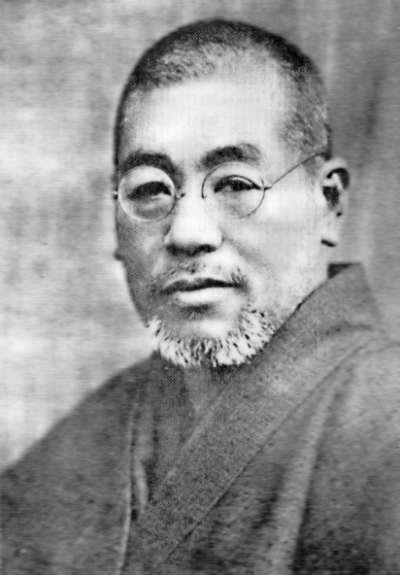
For a project in another one of my classes, I have begun to learn the healing art of Reiki. Reiki is a Japanese hands on healing technique using energy fields rediscovered by Dr. Usui (that's him at the top) in the late 19th and early 20th centuries. It is believed to be what Jesus and Buddha used. Reiki can be used on plants, animals, and people.

Reiki is not just something you learn either. You have to be connected to the Reiki energies to use it. I had my first "attunement" two weeks ago. It threw me for a loop for at least a week and is now settling within my system. I still have one more week of adjustment to go, then I can have my next attunement.

Reiki can be used to heal others and to heal yourself (which is the focus of the first attunement). One of the reasons I wanted to learn it is because of how it connects humans across borders. I can trace my attunement energy back to Dr. Usui through a lineage of 16 people. It's very cool! Plus I can use it to help others. One has to be open to have a Reiki treatment and open to give a Reiki treatment. You have to intend good for the world. I love it! I feel more connected to the earth and to my fellow humans --even though right now, my attunemnet has stirred up a great deal of anger at the moment!
Two things I've been thinking about:

1. When you go to Publix, the cashiers/baggers can't stand it --they have to use plastic. Every time I have my own bags or ask for paper (I put my recycling in paper bags to take to the recycling stand in my complex.,) they always end up giving me at least one plastic bag! If I have one item left not in a bag, instead of putting it in one of the existing bags, they toss it into a plastic bag on its own. If they start to put it in plastic and you remind them of wanting paper or that you brought your own bags, they just put the plastic bags in the bags. Yeesh! Do you think that they will have nervous breakdown if they don't use a plastic bag at least once? Is it so ingrained in our beings to use plastic bags that we can't deprogram ourselves?

2. Most beauty/personal care products don't come in recyclable containers, yet they are most often made of plastic. Toothpaste, eyeshadow, deodorant. They don't have recycle logos, and I feel guilty every time I throw one away. When are they going to got on the bus --green on the outside too, not just the inside!

Sunday, April 18, 2010

Remember to check your plastic bottles and other containers --those in the recycle numbers of 3,6, and 7 contain dangerous chemicals that mirror estrogen in the body and affect fertility. Don't reuse them --recycle them! Especially do not consume anything that has been sitting in those containers in the heat or sun --the effect is worse! And check the numbers before you buy! Many plastics will state they are BPA free too. Better yet, search the antique and thrift stores for old glass refrigerator containers. Those are re-usable and friendly to the environment. (Although, I can't remember if there were some that contained poisonous compounds or dyes. Might just be pottery --something to investigate.)
A word about those cheap, reusable shopping bags available at various stores. These are polypropylene and polyester. Both are synthetic fibers and are not biodegradable. How many tons of them are made, and how many of them are not recycled when they are damaged?

The stores make them available for their customers to purchase and then improve their "green" image with the consumer --and cheaply too. However, they are creating just another problem. Further, the consumer has not educated him/herself enough --on the whole --about what s/he is consuming. We've become sheep, trusting in those who lead us.

Open your mind and learn some things! And for the love of all that is holy --think things through! I was in Earth Fare (a healthy living grocery chain) a few months back, and they had a sign up that stated that plastic bags are lighter and therefore use less energy in transportation. Let's think this through. Would not the shipping truck be the same size? And would not the manufacturer pack that truck with more bags because they are smaller, thinner, and weigh less? So would they not in the end take the same if not more fuel to ship? Also how much energy goes into manufacturing plastic versus paper? Further, plastic is still not biodegradable! What happens to those bags that don't make it back to the store to be re-used?

Just saying. . .think it through. Don't just jump on the nearest bandwagon screaming past because it sounds good! And buy organic cotton canvas bags and troll the thrift stores for old tote bags!

In this post, we are to describe the high points or things we found most difficult in the semester.

I think the high points were the field trips, the final project, the films, the David Orr readings, and an excuse to a read Carl Hiaasen mass-market paperback novel because it was for school! I loved the chance to see Ding Darling without the added stress of trying to find time in my crazy schedule. And I finally got to see ECHO. My mother has made me promise to bring her when she comes down for my graduation.


I did find it difficult to juggle the extensive work load that the Colloquium class required. Four papers plus a blog plus a final project have worn me out, and at this junction of the semester, I wonder how I am going to get it all accomplished on top of the workload in my other classes. Colloquium should really be worth far more credits than it is.


Though I understand the need for many of the projects, papers, viewings, and readings, I think the university should consider more projects that focus on getting us outside and just being! Also, is it really sustainable to have people drive to campus to take a bus and then drive home, when many of our field trips were near various students' homes? Yes, the bus trip is used as teaching time, but that makes the class an hour and fifteen minutes longer than normal. It's wearing on the students, especially as it's during lunch time --not healthy. A little restraint, please! Also is it not wasteful, and a little hypocritical, of a class focused on environmental sustainability to have a textbook that is only good for one school year? Hmm, something to think about.


In this post we are to reflect on the meanings we have made from our Colloquium class experience personally, academically, and in relationship to our major.

I dragged my feet about taking this class as I am a native Floridian and have had plenty of experience in the wilds of my native land. Still, I learned a lot and enjoyed the field trips as a break from classroom activities. Plus, I wisely waited until the spring semester when it was much cooler, which made the trips far more enjoyable. As I told an adviser who questioned why I had not yet taken colloquium: "I am not about to traipse about this campus in the heat!" More snakes then too. I'm sure they all have some vital role in the ecosystem, and their absence would discombobulate everything like the absence of wolves did, but I prefer to live in denial and continue to think of them as thoroughly unnecessary.

I am an English major with a Creative Writing minor. I love to write, and this class has reminded me why I should devote some of my writing time to writing about the environment and sustainable practices. I hope to keep that in my mind as I continue forward in my studies and my career. Things are desperate and to me they seem hopeless. I don't tend to have a lot of faith that people can change. I spent most of the semester depressed about this. Maybe, I can help to make a change through my writing.

Here we are to list five important things we have learned about China, India, and/or other developing countries.

1. China is making some huge greenhouse gas emissions and may even surpass us soon. Meanwhile, their emissions are our emissions. Not surprising given how much we out-source production to China.

2. India is doing a lot to help sustain the environment. We often think of countries such as India as being too impoverished to focus on such things. This is proof that this is simply not true.

3. Many of my classmates are under the impression that our butting in to the policies of "developing" countries is in those countries' best interest, even if we are exploiting them for our own gain. "We've raised them up from nothing," is a quote from a fellow classmate. Talk about making my blood pressure go up! Not everyone wants to be an American and not everyone wants to live like us either! Further, we have often done more harm than good.

4. Though, I am a big fan of the E2 series, I noticed they too sometimes take the view that "developing" countries want what we have. So now I must go on one of my soap-box tirades. This viewpoint by E2 became abundantly clear when focusing on various places in Africa. The narrator and the people interviewed kept going on about how these people live in poverty. Yet, everyone they filmed appeared clean, well-fed, beautifully dressed (even taking time to wear aesthetically pleasing designs, colors, and patterns). Their clothes were in good repair too and were nicely accessorized. To me these people looked more like they were living simply than that they were poor. And while they are finding ways to bring sustainable electricity to many who have not had it before and improving energy use (like with the tea vendor) it is important to remember that not everyone wants to be electrified. Also, I hate the terms "developing" and "third world". Call them what they are for the most part: post-colonial! That's right --own up to what Western imperialism has done to these countries. Colonial occupation has forever disrupted the natural path of many of these societies. Once the colonists were gone, and the people had their countries back, they had no choice but to attempt to survive in an economically driven world since for centuries, their lives had been devoted (and the path of their economies changed) to serve the desires of the colonists. Now these countries face a new brand of imperialism --what Edward Said refers to as "economic imperialism". Watch "Black Gold" if you doubt this. To survive, frequently these countries have to do things our way and on our terms. They are only perceived as lesser because we created the image of them as such.

However, I must defend E2 on another count. Recently, our class took a trip to ECHO, a church run experimental farming organization. They focusing on doing God's work by feeding the hungry of the world. I noticed that all of the ECHO volunteers in the DVD presentation were white and all of the "students" were of a much darker complexion --many of African ancestry. I got the sense from the film that ECHO sees itself as saving the poor brown man --and isn't he so lucky that we white people are so charitable and are here to help him. Though, on the whole, they are doing good work, this creeped me out. Plus, I also wonder how often Christianity is foisted upon the recipients of their help. E2 in contrast spoke to people making a difference of all races and ethnicities both inside their own countries and across the world.

5. I'm still fascinated by the reaching of peak-oil in Iran and the timing of the Islamic revolution. My graduate studies will focus on a creative work set in Iran. I look forward to studying this little nugget of information further.

For the episode of our choice, I chose the one on Portland. This episode focuses on urban spaces and a sense of community, especially in Portland, Oregon. What a beautiful place, Portland!

I wanted to watch this episode because I thought it might help with our final project. Our final project focuses on the revitalization of downtown Fort Myers. My group is focusing on the riverfront. It's a very exciting project! Although, I might have also like to work on the revitalization of Dr. Martin Luther King Blvd.

I think what I took away the most from this episode is how Portland is cultivating a sense of place. We've become so surrounded in what Beaudrillard terms the "hyperreal" that we've lost a sense of culture and sense of place. We've expanded into suburbia and fallen in love with chain stores. We've become homogenized. Like Portland, Ft. Myers has its own special history that should be retained and cherished and we should be proud to live in such a community. As such, in my portion of our project, I have added a leisure center that makes use of an old riverfront building and would bring many people in the community together. It would also offer a history course on Ft. Myers, while also encouraging downtown community meetings. (They have these in Botswana --part of old tribal traditions --where people in the community can come together and voice their concerns and support one a another. It would be wonderful to make downtown Ft. Myers as friendly and beautiful a place to live and work as Portland --and to give it just as much a sense of its own place as Portland has.


Episode 3 of E2 Transport was about food miles. It takes 10 calories of energy for every calorie of food we consume. We like to drag our food everywhere! I loved the owner and chef of the White Dog cafe in California who has been sourcing local produce for her restaurant since the 1970's. Now she is working on cruelty free meats. She has also tried to help expand these practices to other restaurants. In England chefs have been doing the same thing. Jamie Oliver and Clarissa Dickson Wright are among the many prominent chefs leading the way. For several years, I myself have refused to by California citrus. For Pete's sake, we're in Florida! Then there are those expensive Dutch red bell peppers: It's said we import them because they use fewer pesticides in growing them, but what has to be done to preserve them long enough to get them to the U.S. cancels out any good. Plus they are SO expensive! We grow perfectly good bell peppers in Florida.

Favorite quote: "We export butter cookies to the Dutch, and they export butter cookies to the U.S. One economist said, 'Wouldn't it just be easier to exchange recipes?'" Meanwhile, I still need my P.G. Tips and H.P. Sauce.

Here we are to write about E2 (E-squared) Transport --episodes 1

Episode 1 was set in London. I have to admit that the day I watched it I was v. tired and so happy to see images of my beloved foggy, rainy London that I spaced out a little bit. But a few things did sink in. A lot of green practices regarding transportation in London have to do with the new mayor --who, like Chicago's Mayor Daley, has been criticized for them. Yet he rocks-on anyway!

I found the congestion tax, super cool and very interesting. I also liked how they made they roads more pedestrian and biker friendly, even making wider bike lanes. I also liked the comments on the previous administration's use of barricades to separate the pedestrians from the cars. My favorite image was of a group of executives, in their black overcoats and hats and carrying their black umbrellas and briefcases, walking in formation behind one of the barriers. They looked like prisoners on morning exercises!

I liked too that Trafalgar Square as been closed to traffic and is now an open space. In the 1980's I spent a New Year's Eve watching the festivities from the window in the bar of our hotel in Trafalgar Square. My favorite New Year's ever! Another notable thing about that experience is that although the place was packed with people and trash was everywhere, the next morning it had all been cleaned up and put to rights. Totally impressive!


In this post we are to write about the film "Crude Awakening". It's about the peak-oil crisis. Though I think they were a little heavy handed with the emotional manipulation through horror film music, they did make some good points. I especially loved the images from the early part of the twentieth century during the oil boom --some in the U.S. and some in Baku. Men were covered in the stuff, splashing in it like children in puddles. It gave a strong sense of wastefulness. Then contrasting those images were images of Baku after the oil ran out. The land was decimated! It looked like a battle field. (Interesting how the destruction humanity inflicts upon the earth always looks like a battlefield. I've often said the same thing about clear-cutting land. The "after" scene always looks like images I've seen of WWI).

I also love all of the old film clips of mid-twentieth century ads about oil and oil products --cars, cosmetics, clothes, gasoline, etc. Though these ads were meant at the time to be pro-oil, they are chilling now. They could be read an entirely different way!

Another thing I found interesting, was that peak oil in Iran was reached in 1978 --around the same time of the Islamic revolution when the Shah had to high-tail it out of there. It's known that the U.S helped to put him in power. I wonder now if it also chose to desert him when the oil supplies ran out. As anyone who knows me will tell you, I have a great deal of respect for Iran and the Iranian people. Neither of the most recent governmental regimes have worked well for them and neither have they been complete failures. Yet, I wonder how much the U.S. (and Britain and France, etc.) has helped to cause the political situation Iran faces now --and all over using them for our own oil agendas.

Favorite quote from the film: As far as I know, They're not makin' a lot of dinosaurs anymore."
In this post, we are to comment on the PBS E2 (read E-squared) series. These half-hour episodes focus on ecological and sustainable design, transportation, and energy. They are A-M-A-Z-I-N-G! You can rent them, watch them online, or better still --buy them as it supports PBS.(Of course, if you're feeling v. consumer spending conscious in deference to the environment, then you could watch them online and just donate money to PBS --just as long as we support PBS). This series, narrated by Brad Pitt and Morgan Freeman, go around the world to look at various countries and what they are doing to help the environment. From rooftop gardens and green space in Chicago to turning a garbage dump into a garden and park in Cairo --these shows are fabulous.

This particular journal entry should focus on season one of E2 Design --episodes 3, 6, and one of our choice. Episode 3, "The Green Machine", was about Mayor Daley in Chicago and how he wanted to green-up the city. He received a lot of criticism for his actions and beliefs, but he was determined. It's about time someone in the U.S. takes a stand in the political arena about environmental issues --for the good of the earth I mean --we already have George W. Bush.

Here's some stats from the opening credits of the series that illustrate the importance of Daley's work: 40% of the world's energy and 50% of its carbon emissions are from building and more than half the world's population live in cities. Chicago is the birthplace of the skyscraper, so it knows a little something about these stats from experience.

One of Mayor Daley's first projects as mayor, and the one that stays in my mind (strange because it has nothing to do with greener building practices but probably because it's so Secret Garden-like)is creating a rooftop garden on top of city hall. He saw this in Europe and wanted to recreate it here. Most city buildings are a flat expanse of tarmac and gravel that just soak up the sun and require higher energy use --especially in cooling a building. They make a perfect canvas for green space so desperately needed in the city. The city hall garden was also home to a whole ecosystem of of plants, animals, and insects.

Many criticized the mayor for his choice to make this his first green project, but now they see it as a symbol of the administration and of the importance of greener practices.

My favorite quote from this episode is: "We cannot consume our way out of this." So true --that's what got us in the mess in the first place!

In episode 6, they went to China and looked at the change in building design there. Architects made use of natural light and the dynamics of air flow to create a building (I think it was a library) that used far less energy heating, cooling, and lighting. Plus the added benefit was that one could curl up with a book or work at a table accompanied by a beautiful view of the city. On a stormy, rainy day that would be heaven! I also loved the escalators that stopped running when no one was on them. Fabulous!

Now for the episode of our choice: I chose episode 2, "Green for All."
Loved it! It was about affordable housing for the Yaqui Indians in Mexico and creating a sense of community with affordable housing in Texas. The episode centered these projects around architect and teacher, Sergio Palleroni. He's lovely, and by the end of the program, I had developed a major crush on the man. He respectfully worked with the people of Mexico and in the Texas community instead of at them. I use "at" meaning --he didn't view himself as someone there to save the less fortunate but as a neighbor and friend who just happened to have extra skills. This a rare thing in the West where the prevailing attitude is to save the brown man from himself.

Palleroni created housing for the Yaqui that functioned the way they functioned. These homes were made from local materials and were set-up to accommodate the way these people lived. These houses also required less expensive upkeep, so stayed within the owners' budgets.

In Texas, Palleroni gathered a group of volunteers to help clean up a low income neighborhood. They fixed things in the houses and cleaned up a shared alley. By cleaning up the alley, they created space for gardens --for food and aesthetics) and brought a sense of community and pride back to the neighborhood. Instead of being a forgotten place fraught with crime, it became a community gathering place and a safe place for children to play. It reminded me of Gwendolyn Brooks' poem "a song in the front yard". I've been inspired to write a poem myself about it!


O.K. I've been dragging my feet for several weeks on this one. In this assignment, we are supposed to find a source on the web that argues that climate change is not an issue. I've been avoiding it as I strongly believe that anyone who denies the presence of climate change in the overwhelming light of overwhelming evidence is either deeply in denial him/herself or is working under a hidden agenda. Either way, s/he would make my blood pressure go up and that wouldn't be pretty.

Anyhow, I had to tackle it, so I found an article in the Telegraph online about Dr. Michael Griffin. Dr. Griffin was nominated head of NASA by George W. Bush in 2005. His nomination was later approved by the Senate. In 2007 Dr. Griffin stated, "it was 'arrogant' and unfair to treat global warming as a problem that needed to be tackled." He further stated that global warming did likely exist but that he didn't feel it was a problem. He said, "To assume that it is a problem is to assume that the state of Earth's climate today is the optimal climate, the best climate that we could have or ever have had and that we need to take steps to make sure that it doesn't change."

Sure, he's not denying climate change, but he is suggesting that it's not necessarily a bad thing --perhaps he might also be suggesting that climate change is just a matter of earth's evolution and not a man-made thing. Hooey! Dr. Griffin was widely criticized by his colleagues for taking this stand and later apologized to them behind closed doors.

It is also a well-known fact that George W. Bush had extensive oil interests and came from an oil state. And, as we learned in class, he and his administration did a good job of burying climate change data. Talk about an agenda! (See the 60 minutes interview with respected NASA scientist Jim Hansen and the Bush administration: http://www.cbsnews.com/stories/2006/03/17/60minutes/main1415985.shtml) Dr. Griffin seems to have climbed on board Bush's agenda train too.

Jim Hansen, however is a respected scientist who first brought climate change to world attention in the late 1980's. Climate change is not a new concept --it just seems to be after eight years of foolishness under the Bush administration. Jim Hansen referred to Griffin's statement as "arrogant" as well.

It is also interesting to note that, with the coming of the Obama presidency, Griffin left his position as head of NASA. There is this complicated dance where the heads of various agencies tender their resignation during a change of administration. Various colleagues make recommendations that certain heads should stay, and the new administration decides to accept or decline their resignations. Dr Griffin's resignation was accepted and he had to find a new "agenda". GOBAMA!